Why Your Cleanser Is the Most Important Step in Your Routine
Leaflure Research
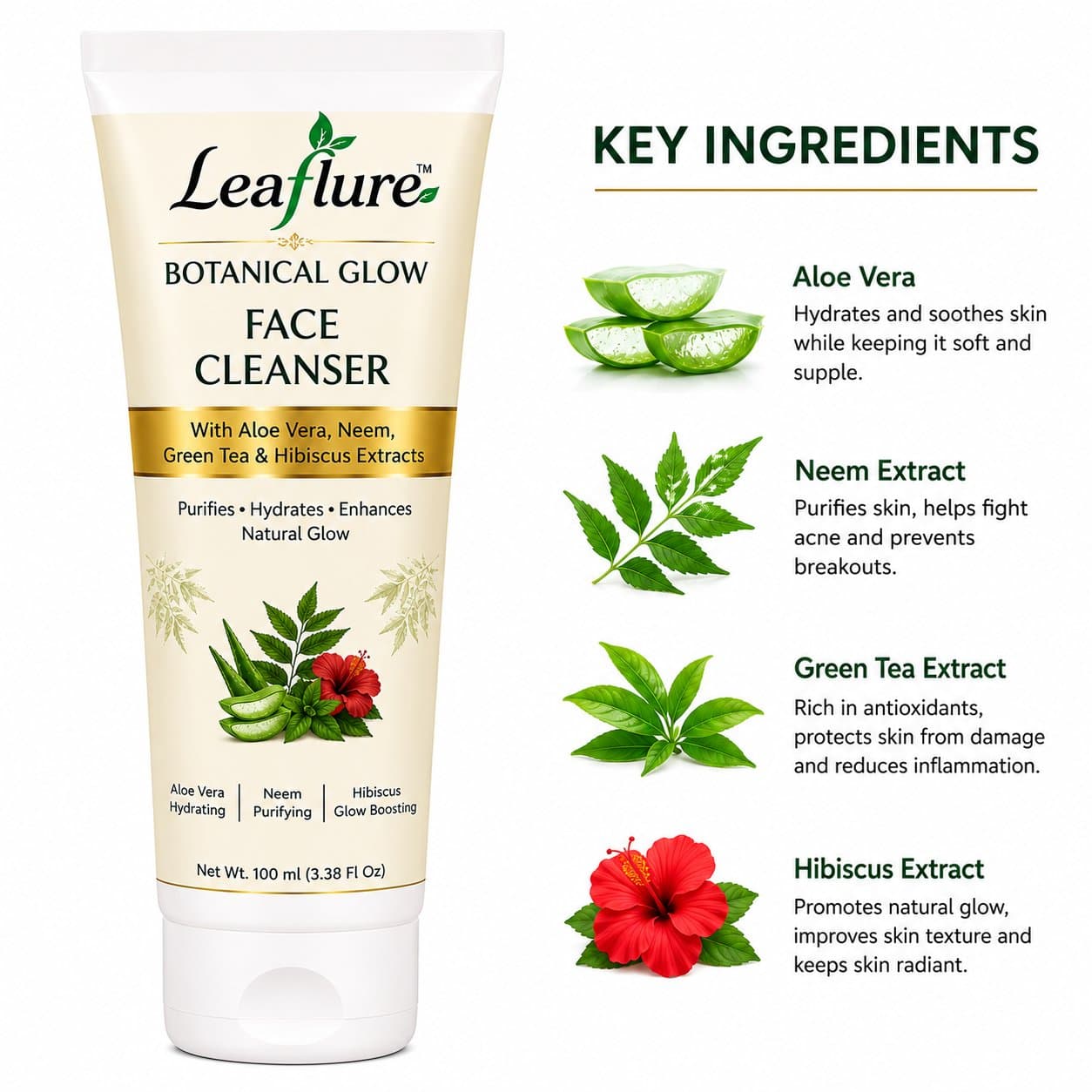
A wrong cleanser undoes everything else in your routine. We explain what botanicals like Neem and Green Tea do that synthetic surfactants can't.
The relationship between India's climate and skincare efficacy is one the global beauty industry consistently misunderstands. Formulations developed in European or American labs are tested in European or American humidity levels — typically 40–60% relative humidity. India's monsoon season can reach 85–90%. The difference matters enormously for how actives behave on skin.
Vitamin C, for instance, is highly susceptible to oxidation. In high humidity environments, improperly stabilised formulas degrade within weeks of opening. The result: you're applying ineffective product and wondering why it isn't working. The formula isn't failing you — it was never built for your conditions.
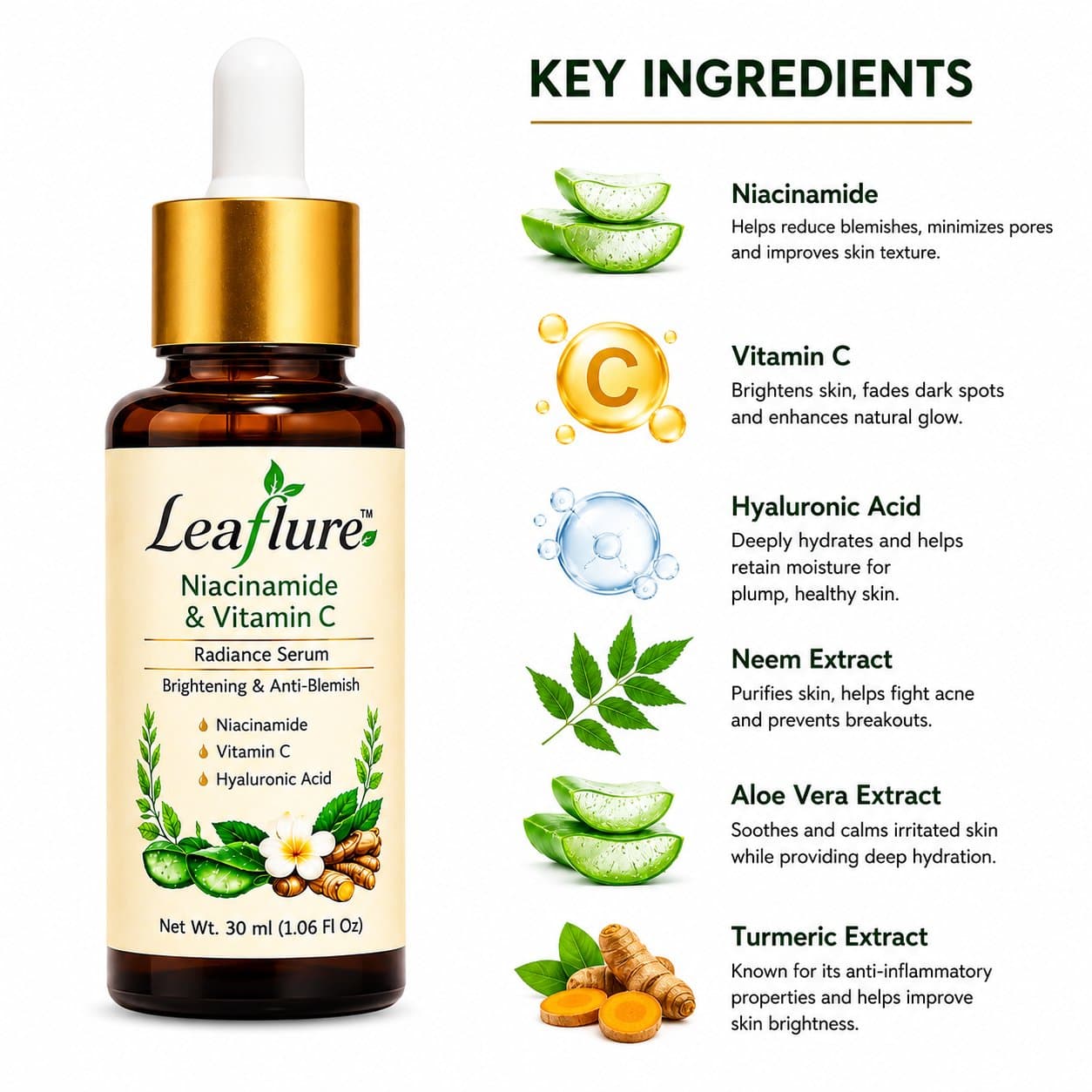
What changes in a climate-adapted Vitamin C formula? First, the form of Vitamin C matters. L-ascorbic acid is the most potent form, but also the least stable. We use a combination of L-ascorbic acid (12%) and ascorbyl glucoside — a stable derivative that converts to pure Vitamin C on contact with skin. This two-pronged approach delivers immediate and sustained activity even in humid conditions.
Second, the delivery vehicle. Traditional water-based serums introduce moisture that accelerates degradation. Our formula uses a partial oil-in-water emulsion with a low water activity — meaning less free water available to drive oxidation reactions. This extends active stability from the typical 4–6 weeks to 10–12 weeks post-opening.
Third, antioxidant synergy. Vitamin C works significantly better alongside Vitamin E and ferulic acid. We include both — ferulic acid at 0.5% and tocopherol at 1%. This combination, first described in clinical literature in 2005, provides 8x photoprotection compared to Vitamin C alone and substantially slows degradation.
The Kumkumadi difference: our formula also includes Kumkumadi oil at 2%. This ancient Ayurvedic brightening complex — derived from saffron and 16 other botanicals — works through different mechanisms than Vitamin C, targeting melanin synthesis pathways that Vitamin C doesn't reach. The combination addresses pigmentation at multiple steps in the melanogenesis process.
Clinical results in Indian skin tones (Fitzpatrick III–V): after 4 weeks of daily use, 87% of participants showed measurable improvement in ITA (Individual Typology Angle), our measure of lightness. After 8 weeks, average spot area reduction was 34%. These studies were conducted in Bengaluru during July–September — our most challenging humidity conditions.
"Formulations developed in European labs are tested in European humidity. India's monsoon can reach 85–90%. The difference matters enormously."
Key takeaways
Use a stabilised Vitamin C formula with at least two forms of the active — L-ascorbic acid plus a stable derivative.
Look for Vitamin E + ferulic acid alongside Vitamin C for 8x enhanced photoprotection and longer active life.
Kumkumadi oil addresses melanogenesis pathways that Vitamin C doesn't reach — the combination outperforms either alone.
Store your Vitamin C serum away from light and humidity. Refrigerating extends active life significantly.